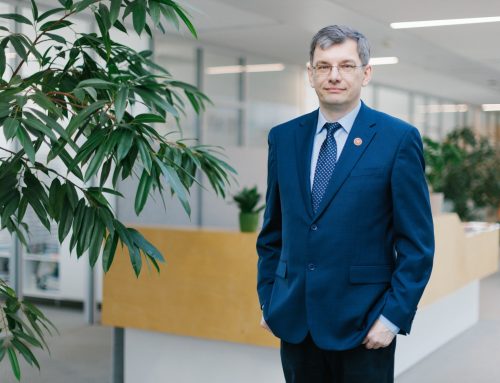
Blog Post by Hlib Bityukov, Veteran and Head of the UCU Center in Kyiv
Ukraine is experiencing another peak in public distrust of its authorities. However, beyond purely political reasons, there are much deeper, less superficial underlying causes.
After every major conflict, a nation eventually faces more than just the question of victory or defeat; it must also face the reality of those returning home from war.
Following its wars, the United States experienced a wave of veteran suicides. The terrible peculiarity of this epidemic is that it does not vanish immediately after hostilities cease. Instead, it lingers within society for a long time—manifesting in addictions, divorces, silence, and the pervasive feeling of no longer being at home anywhere. The suicide rate among American veterans is twice as high as that of the civilian population. Approximately seventeen veterans die by suicide every day, totaling nearly six and a half thousand a year.
While one can debate the causes and consequences of American wars at length, the undeniable truth is that at the heart of every war are people. We are only just opening the door to this specific hell. Ukraine has not yet experienced the mass return of its veterans. A significant portion of those who joined the military remains in active service. Many have lived for years separated from their families, the civilian world, and normal human connections.
If anyone believes this transition will be easier for us than it was for the Americans, they are mistaken. It will not be.
This challenge is not solely about post-traumatic stress disorder (PTSD). It is not merely about injuries, losses, concussions, or insomnia. It is about the culture of the environment in which individuals are forced to live for years. The military is a closed institution, and such institutions quickly begin to operate by their own rules in the absence of transparent monitoring, accountability, and respect for human dignity.
The recent events surrounding the “SKELIA” (“Rock”) regiment, evidence of cruel treatment in other assault units, and the public conflict between the country’s political and military leadership are not isolated scandals. They are symptoms of a much deeper illness. Like a throbbing toothache, these symptoms are painfully familiar to those who serve but cannot speak out, yet they remain shocking to those outside the military. They are the diseases of an army that has remained unreformed for far too long.
While Ukrainian society has been learning to build democratic institutions and to value human rights, dignity, freedom, accountability, and openness, the military has largely remained a remnant of a bygone era. It is an era where the priority was the actual order rather than the result; the staff unit rather than the individual; the sanitized report rather than the truth; loyalty rather than efficiency; and the ability to shift blame downward rather than taking responsibility.
In such a system, ranks are often awarded for seniority rather than results. Commanders are evaluated not on how many lives they save or what they achieve, but on how comfortably they fit into the chain of command. Now, many of those who were raised in this culture are leading troops in the largest war in our history.
This does not mean the entire military operates this way. There are fantastic commanders, and there are units that protect their personnel, train rigorously, analyze their actions, openly discuss mistakes, build trust, and fight using modern tactics. However, the existence of these exemplary units makes the persistence of the old system even more painful to witness.
Every year, we witness several catastrophic and irreparable losses of our fighters driven by populism. People are thrown into senseless assaults merely for political optics. A city may be dubbed a “fortress,” yet everyone inside understands the bloody price of that metaphor. Fighters are ordered to hold their positions not for the sake of victory, but for the sake of convenient reporting.
War frequently combines courage and heroism with incompetence and indifference. This is one of its most terrible truths. War exposes not only strength of character but also a system’s inability to make sound decisions. In civilian life, the cost of such poor decisions might be the loss of a job, the cancellation of projects, bankruptcy, or reputational damage. In war, the price of a mistake is fundamentally different; the cost of a bad decision is paid in human lives.
In one of the companies where I served, fifteen soldiers went AWOL in a single day. This constituted almost half of the unit. It is easy to dismiss them as weak, cowards, or traitors, but the reality is often far more complex. Most of them only ever heard their commander over the radio; consequently, they had no clear understanding of their objectives, the locations of their own forces, or the position of the enemy. They lacked any sense of the day’s tactics or the strategy for the near future.
Casualties fade into the background. Fabricated reports take precedence over the reality on the ground. Commanders who show initiative are broken or pushed aside—treated like capricious calves that have strayed from the herd. A mobilized soldier does not enter a functional military organization, but rather an environment defined by fear, humiliation, and injustice. This toxicity is visceral. It is somewhat incomprehensible, which only makes it feel all the more real.
Ultimately, this establishes the rules of the game.
One cannot expect a return to normalcy when the very foundation of relationships is rooted in mutual distrust. When a system depersonalizes individuals, they respond with aggression, apathy, or profound disillusionment. If rudeness, deceit, humiliation, and indifference to the needs of others become the environmental norm, they eventually cease to be viewed as deviations. They become the language of survival.
And eventually, this language returns home.
It permeates the family unit, conversations with children, and marriages. It bleeds into politics and street conflicts, ultimately shaping how we look at one another after the war.
War never truly ends, neither for those still in the military nor for those who have been discharged, because it is impossible to completely return from it. You can return to civilian life, but you cannot leave the war behind. You can no longer connect with the previous version of yourself.
For many military families, their existence together has already become merely formal. It is impossible to be torn away from your family for years, only to return and act as if nothing has changed. It is impossible to live for years in an environment where personal space, care, tenderness, and the recognition of others’ value are treated as weaknesses, and then seamlessly transition back to a culture of intimacy and closeness.
Veterans return to civilian life as though arriving from another planet. Often, they cannot find a place for themselves—neither in the world they left behind nor in the one to which they have returned.
One of the most dangerous forms of war is the one that continues within oneself long after leaving the front lines.
Therefore, military reform is not merely an internal administrative matter; it is a question of the very future of Ukrainian society. The culture the military fosters today will not remain contained. Like pressure building in a closed vessel, it will inevitably spill over.
If humiliation, fear, deceit, irresponsibility, and the devaluation of human life are normalized within the military, these traits will manifest in our society—only in civilian form.
Conversely, if the military learns to cultivate an environment of mutual respect, accountability, truth, professionalism, and reverence for human life, those are the values that veterans will bring back to the country.
We need a military that is capable of fighting. But we also need a military that leaves its people capable of living afterward.
Not just surviving, but truly living.
Victory is not merely a geographic concept. Victory is also defined by the kind of people we will be when we emerge from this war, and the kind of country we will become in its wake.
Source: Ukrainska Pravda