“We’re building a country of Superhumans together.” Ukrainian Catholic University held a meeting with the team of the Superhumans Center, a national center for prostheses, reconstructive surgery, and rehabilitation and psychological support for those suffering from war, who are on the difficult road of recovering from wounds.
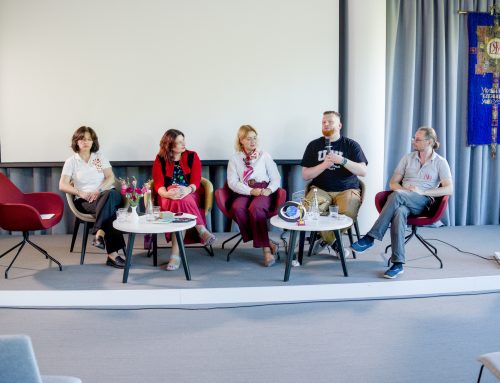
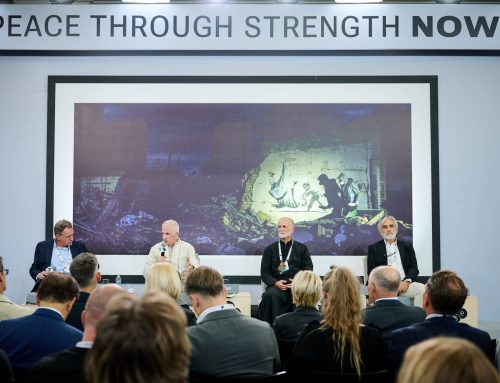
Veterans shared with UCU students and staff their personal stories of struggle, and they talked about the difficult process of physical and psychological rehabilitation, the support of the community, challenges of inclusion and the importance of a culture of mutual aid in society.

The participants of the meeting were able to hear about what life with a prosthesis or in a wheelchair means. Through practical exercises, each person had an opportunity to try to understand the experience of amputees or those with limited mobility.
Mykyta Baburkin, head of the Superhumans Center in Rivne, a veteran, said: “For us veterans it’s important not only to tell our story but also to see that youth truly listen to and understand us. During a panel discussion, we spoke about life after war, about challenges, losses, but also about new meanings. This particularly inspired an interest in rehabilitation, not as a formality but about real team work, where technology, professionalism, and humaneness are important. Helping veterans is not about pity but about respect and responsibility. And when we see how students are ready to take part in volunteering or internships, this is a true example of actively removing barriers. We thank you for this meeting. It was important for all of us.”

Mykyta Baburkin, head of the Superhumans Center in Rivne, a veteran
During the meeting, the participants also learned about modern prosthetics technology and ways to get involved in volunteer initiatives and support of veterans at the level of the university community.
Sofiya Pelykh, a 1st-year student in psychology, said: “During the event we were able to speak with veterans and try to move with prostheses, and we also learned more about the particularities of their structure. People told their own stories. In my opinion, initiatives like this help overcome the gap between civilians and the military and are necessary to build our country’s future.”

“We’re building a country of Superhumans together.” Ukrainian Catholic University held a meeting with the team of the Superhumans Center,
Accessibility is not only about ramps and elevators, emphasized Oksana Hrozna-Fialkovska, manager of educational projects at Superhumans Сenter: “Accessibility is about a society where each person feels equal. Everyday hundreds of defenders who, having been wounded, are in wheelchairs or with prostheses, or with limited vision or hearing, go out on the streets of our cities. The task of you and me is to create worthy conditions for their comfortable lives in the city: on streets, in stores and hospitals, shopping centers, and other places. The goal of meetings like this is to motivate everyone to become AN AMBASSADOR OF ACCESSIBILITY. Start with yourself, the place where you work or conduct business. Check if your office, store, or restaurant is accessible to invalids. Become a voice for those who need accessibility. If you see a problem, e.g., stairs without a ramp, the absence of handrails or an elevator, don’t be silent. Speak with the administration and explain why this is important. Often people don’t think about these things until someone speaks up. Talk about this with friends, colleagues, and acquaintances. The more people are aware of the importance of an accessible environment, the more quickly we together can change our country.”

The event was organized by UCU’s Office of the Affairs of Veterans and Their Families, the Personnel Department, and the Dean’s Office for Student Life.
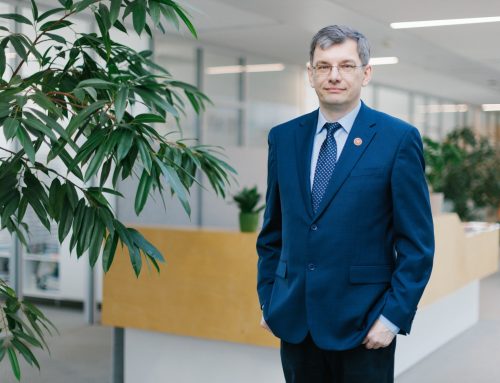
Khrystyna Tsar, head of the UCU Personnel Department, added: “For us, meetings like this are part of a long road which we are passing through as a university together with the veterans’ community. We already have a number of initiatives at the university to support our defenders, and many plans lie ahead. We want veterans who come to UCU to know that people are waiting for them here, where they’re understood and appreciated.”