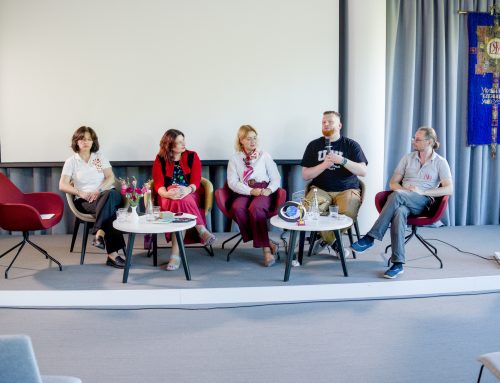
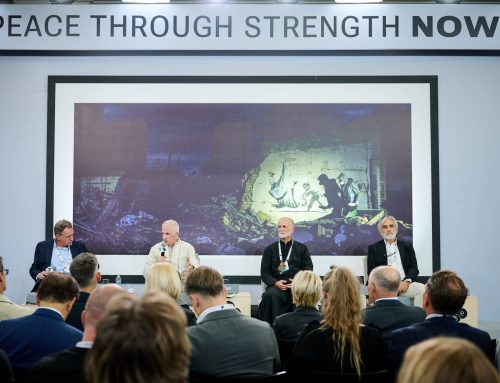
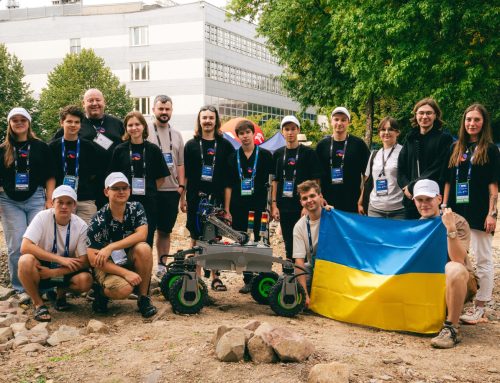
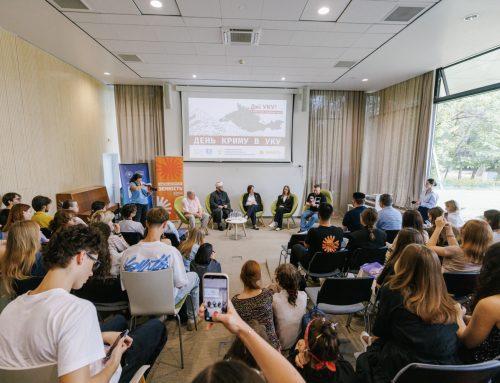
As part of the Taizé European Youth Meeting, which took place in Paris from December 28 to January 1, the UCU School Theater On Simon’s Pillars presented the performance “Little Orthopedic Sandals.” This is a stage experience of the story of Christmas and Ukraine through the poetry of war and hope.
The performance featured texts by Iryna Tsilyk, Serhiy Zhadan, Kateryna Mikhalitsyna, Halyna Kruk, Artur Dron, Maksym Kryvtsov, the late Viktoriia Amelina, and other poets, soldiers, and volunteers, interwoven with Christmas carols and visionary images of timeless Christmas figures.
The poems spoke of the black abyss of war, loss, and pain, while the carols told of exile and refugees—Mary, Joseph, and the newborn Jesus. It was about a Christmas that does not happen “somewhere, sometime,” but here and now—in the reality of war, according to the theater’s Facebook page.
“It was a special testimony before young people who gathered in Paris from all over the world. We are glad that the performance resonated in the hearts of the audience, despite language barriers,” notes the theater’s artistic director, Yevhen Khudzyk.
Brother Benoît, a member of the ecumenical Taizé community (France), shared his impressions of the UCU theater’s performance and thanked them for the deep and moving production:
“A Christmas performance that combines contemporary Ukrainian poetry, carols, and visual imagery opens a space for reflecting on the experience of war, forced journeys, and hope. Through art, it invites shared listening, empathy, and the silence in which meaning is born. ‘Little Orthopedic Sandals’ is an extraordinarily powerful stage experience in which the pain of war is joined with poetry, memory, and the light of Christmas.”

The performance “Little Orthopedic Sandals”
One of France’s most authoritative newspapers, “Le Figaro,” wrote about the performance by the UCU School Theater On Simon’s Pillars.
“These small testimonies are among the most important outcomes of our pilgrimage, as they help restore the relevance of the tragic events in Ukraine within the European discourse, taking them out of a purely political framework and giving them existential significance,” adds Yevhen Khudzyk.
The theater emphasized that showing this performance abroad is important, as it is a living testimony of the Ukrainian experience of war expressed through the language of art. Ukrainian culture today is not only memory, but also a responsibility to speak the truth to the world.