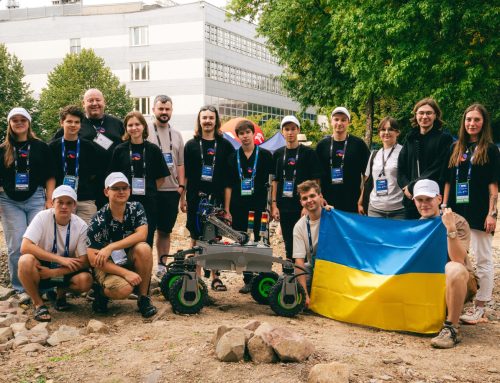
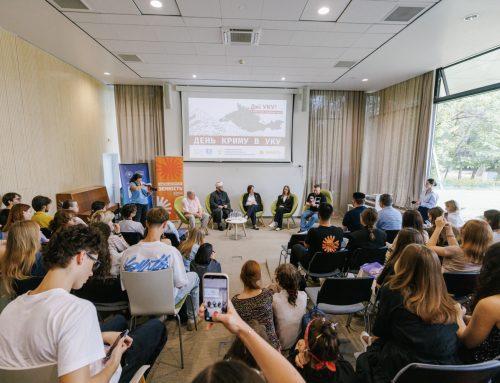
From June 15 to 21, UCU’s Institute of Ecumenical Studies (IES) for the third time organized a summer recovery school for military chaplains with the goal of their spiritual and psychotherapeutic renewal and also to learn from and share the experience of military chaplaincy. Supporting churches’ chaplaincy ministries, IES strives to strengthen its ecumenical component, which has practical use in providing pastoral care for soldiers who belong to various religious communities. This year, the school was held at the Marian Spiritual Center in Zarvanytsia in the Ternopil Region.

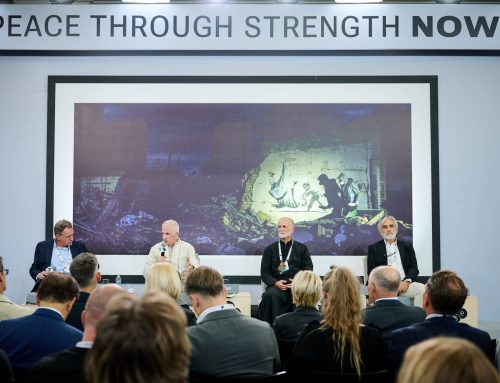
On the first day of the school, the chaplains had an opportunity to hear lectures by Myroslav Marynovych and Pastor Igor Plohoy. Marynovych is advisor to the rector of Ukrainian Catholic University, president of UCU’s Institute of Religion and Society, a former political prisoner, a current Ukrainian civic activist, and a founding member of the Ukrainian Helsinki Group. He began the school with an inspiring lecture about his difficult time of imprisonment, interrogations, and abuse. He drew clear parallels with current methods of persecution and pressure used by Russian authorities. He emphasized the importance of the moral choice of each person in whatever circumstances.

Pastor Igor Plohoy, founder of the NGO Chaplaincy for the Military and head of the NGO Christian National Front, shared his thoughts on chaplaincy based on the difficult but significant ministry of Moses, Old Testament prophet, who in his time endured various crises and trials.

Bishop Volodymyr Firman, rector of the Marian Spiritual Center and auxiliary bishop of the Ukrainian Greek Catholic Church (UGCC) Archeparchy of Ternopil-Zboriv, visited the school. He spoke about socially important projects which the UGCC is running in the Ternopil Region. The participants were impressed by the scope and results of this social ministry.

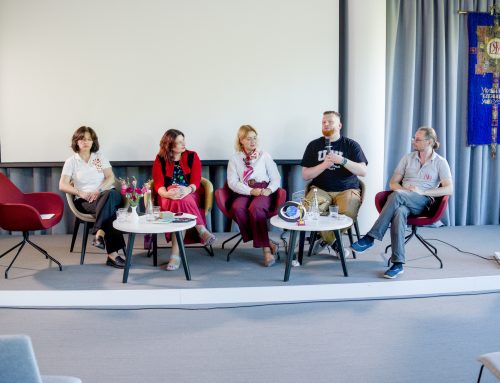
The main component of the school was work with doctor and psychotherapist Olha Kitura. Since the start of the initial Russian incursions in 2014, and especially after the full-scale invasion, Dr. Kitura has been working actively with soldiers and veterans, which has given an opportunity to effectively design a program of art therapy sessions with theoretical and lecture-based components. It’s worth adding that chaplains’ wives were also involved in these sessions. In particular, the school’s participants had the opportunity to discuss stress resilience, emotional burnout, experiences of loss and grief, and the importance of daily rest for maintaining and restoring mental health in wartime conditions—something especially crucial for military chaplains, whose duty is to support and inspire their fellow soldiers and servicemen.

Another important component of the school was the cultural component. It was no accident that a trip was organized to the village of Zazdrist in the Ternopil Region, where UGCC Patriarch Josyf Slipyj was born. He was imprisoned for 18 years in the time of the persecution and liquidation of the UGCC, and, after he was exiled from the USSR, he was able to revive the UGCC in the diaspora and lay solid foundations for its development in the world.

In addition, the chaplains and their families visited the city of Ternopil, where they had a wonderful tour of the city’s historic center and an exciting boat trip along the Seret River.

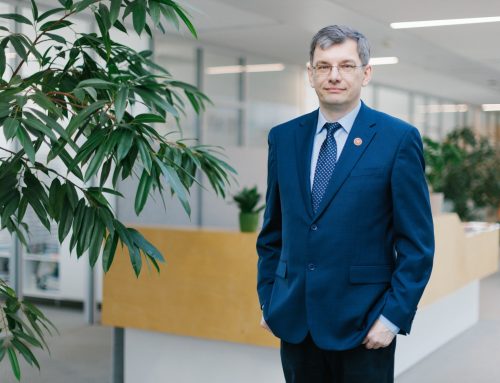
According to Fr. Dr. Roman Fihas, director of UCU’s Institute of Ecumenical Studies and the school’s organizer: “This year at the rehabilitation school for military chaplains we managed to create an atmosphere of openness, sincerity, and real friendship. There were difficulties in arranging the chaplains’ participation, since the majority of them are involved in directly fulfilling pastoral obligations with the troops; but the school happened, thanks to joint efforts.
“Thanks to lively interaction, excursions, art therapy, and work with psychotherapists, the participants had the opportunity to re-conceive the challenges facing Ukrainians soldiers and the chaplains themselves. The school became a kind of ‘re-set’ both for the chaplains and for members of their families. Prayer together and the unique site of the event, the Marian Spiritual Center in Zarvanytsia, played a special role in this. It inspired the participants to search for inner harmony, strength, and peace.”

The school’s participants also met with Pastor Dr. Alexandra Dirks, Senior Chaplain of the German Army and of the Protestant Church Representation for the Federal Armed Forces in Germany. Dr. Dirks attentively listed to the witness and accounts of military experience of the chaplains and stated that the accounts were very valuable, since chaplains in Germany do not have similar experience and are learning and benefiting from the Ukrainian chaplains’ experience.
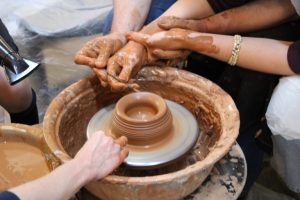
Fr. Vasyl Bilas came to Zarvanytsia to teach a master class in pottery and modeling clay. He serves at the UGCC’s Nazaret Rehabilitation Center. Fr. Bilas spoke much about clay as a material for art therapy: It helps release emotions and negative experiences and helps overcome stress. A highlight of the school was making pots, candle holders, bowls, and other clay vessels, which the participants crafted on a potter’s wheel under the guidance of Fr. Bilas and took home as souvenirs.

Special attention was also given to the chaplains’ families, in particular the children, for whom they prepared a special program and entertainment.
IES expresses its special thanks to our defenders and the participants and their families for their active participation and service in the Armed Forces of Ukraine, and also to our partner, the Protestant Church Representation for the Federal Armed Forces in Germany, for ongoing support of the project.

More photos from the school are available HERE