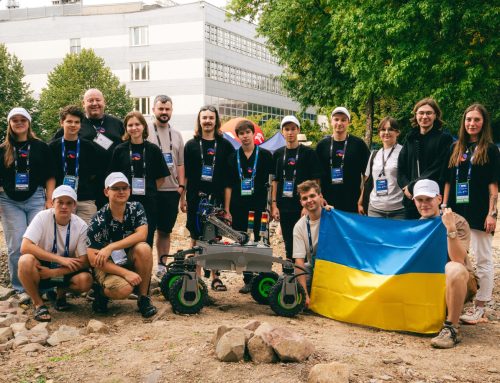
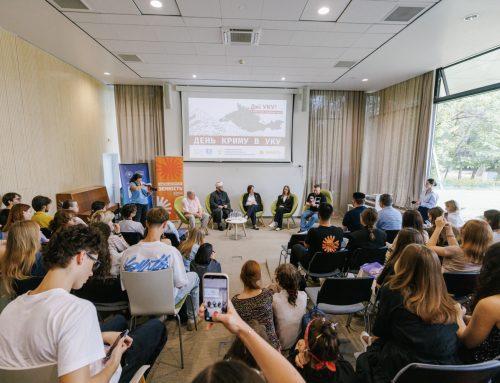
The seventh annual Theological School of the Ukrainian Catholic University (UCU) took place in Univ at the Holy Assumption Lavra of the Studite Fathers. Over the course of five days, more than 70 participants—including university professors and staff—prayed together, shared experiences, and discussed the topic of solidarity during wartime.
The Holy Assumption Lavra is a significant site for the UCU community; the first Theological School was held there in August 1996 and lasted three weeks.
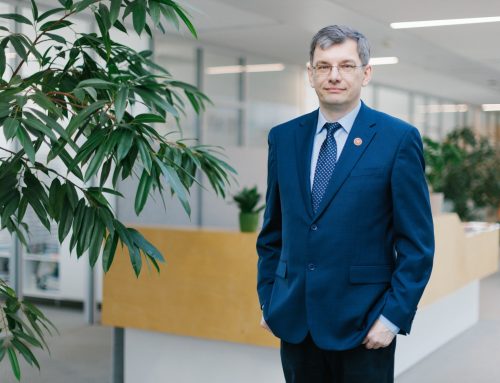
The program began with a Divine Liturgy in the wooden church of Blessed Clement and Leontius, presided over by Archbishop Borys Gudziak, Metropolitan of Philadelphia of the UGCC and President of UCU. “In a country where there is war and constant danger, tension is ever-present. We have gathered here to encounter Christ—to understand who He is and what He means to us. Our knowledge of God is embodied in the relationships we form when He is among us,” the Archbishop said.

Traditionally, the participants held an evening of introductions, where they shared personal stories and reflected on their experiences at UCU.
“I am a long-time employee of UCU, and I felt that I already knew 80 percent of the participants well. But in an informal setting, people open up in a different way. It is much more interesting to hear people’s stories through the eyes of their colleagues,” shared Iryna Skoropadska, communications manager at UCU Media.

“The Theological School is a project created for the UCU community. It is an opportunity to grow closer to God, get to know one another better, and experience the spirit of our community,” explained Natalia Klymovska, UCU Vice-Rector for Development and Communication.
The training opened with a speech by UCU Rector Taras Dobko, PhD. “There is significant pain and suffering around us. Everyone carries their own cross, whether large or small. No one is invulnerable. Remembering our shared vulnerability can help us be more understanding in our relationships. Furthermore, it can serve as an incentive to action—motivating us to be more hospitable, generous, benevolent, solidary, and merciful. It invites the Holy Spirit into our relationships, urging us to manifest God’s order and His kingdom today, rather than postponing it for the future,” Dobko emphasized.

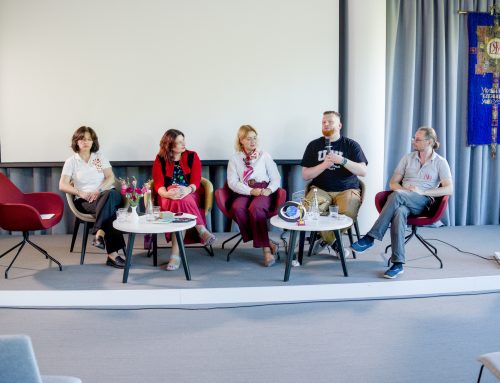
During the Theological School in Univ, several discussions addressed solidarity from various dimensions. The first panel discussion, “What Is the Basis of Our Solidarity?”, featured Archbishop Borys Gudziak; Nazariy Duda, Director of the Catechetical and Pedagogical Institute; Lydia Moskal, Lecturer in the Department of Biblical Sciences; Andriy Kurochka, Head of the Development Department; Hieromonk Rev. Makariy Dutka; and Rev. Dr. Yuriy Shchurko, Dean of the Faculty of Philosophy and Theology.
“The heaviest burden we carry is the freedom of those around us. We must accompany them and support them, not break them. If you encourage a person’s strengths, they will grow,” said Lydia Moskal.
“Solidarity is when your gift becomes a part of another person’s life. Our community of UCU friends stands in solidarity with the university. They don’t just say, ‘I’ll give you a piece of bread,’ but rather, ‘Let’s sow and reap together.’ The university is part of their lives because they share responsibility for us,” Andriy Kurochka noted.

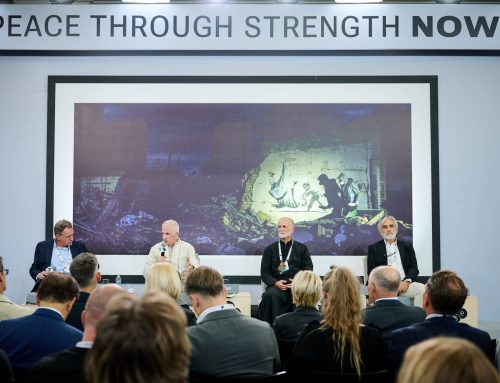
Myroslav Marynovych, advisor to the UCU Rector, human rights activist, and founding member of the Ukrainian Helsinki Group, spoke on solidarity within the contexts of imprisonment, liberation struggles, and war. He shared the high price of solidarity during his time in Soviet labor camps.
“Everything religious was banned in the camps, which is why a form of solidarity emerged. ‘Camp ecumenism’ operated there—a peaceful attitude toward all confessions. How does one remain a Christian when facing an enemy? Is there a place for forgiveness? That was the primary question, not which church you belonged to. God did not create criminal nations, but a nation can become criminal,” the human rights activist emphasized.

The UCU is launching a new community of teachers united by the principles of “relationship pedagogy.” Each year, a cohort of teachers will be selected to receive support for professional development and the implementation of their own teaching initiatives over a three-year period. A panel discussion on this topic featured UCU professors Roman Nazarenko, Halyna Protsyk, Oleksandr Avramchuk, and Sofia Opatska, Vice-Rector for Strategic Development and Founding Dean of the UCU Business School.
“Relationship pedagogy is not about teaching skills, achievements, or grades; it is about building relationships. And a relationship requires the work of two people—it requires effort, sincerity, and foresight,” said Roman Nazarenko. He identified four factors essential for a teacher: humility, which allows one to honestly admit, “I don’t know”; genuine presence; love for the profession; and, ultimately, love for the students.

Reflecting on the role of a teacher, Oleksandr Avramchuk, Head of the Department of Clinical Psychology, noted that teaching is a constant process of mutual reflection: “Our students make us better teachers, and sometimes worse ones. This exchange of reflection is always mutual. By constantly sharing experiences, we change something in ourselves and in them.”
Discussions also addressed Ukrainian-Polish relations, focusing on examples of solidarity and the challenges of modernity. Veteran Hlib Bityukov and psychologist Maryana Mykolaychuk led a conversation on maintaining humanity during wartime.

“I saw war in its most terrible manifestation. You must maintain your humanity for the sake of those around you. War teaches you to be aggressive 24/7, and it is difficult to return to civilian life. Cynicism helped me survive what I saw,” said Bityukov. He argued that humanity must be preserved for the future, adding, “The war environment teaches you not to trust anyone. You cannot keep your ‘bulletproof vest’ on when you return to civilian life. Society needs to bridge the gap between civilians and veterans.”
Archbishop Borys Gudziak concluded the school by focusing on nurturing family relationships within the community. Participants spent the final day in a family atmosphere, praying together and walking the grounds of the Lavra.

“I thank God for these blessed days as we prepare to start a new school year. Let us be at peace and open our hearts,” the Archbishop concluded. All participants received certificates of completion.