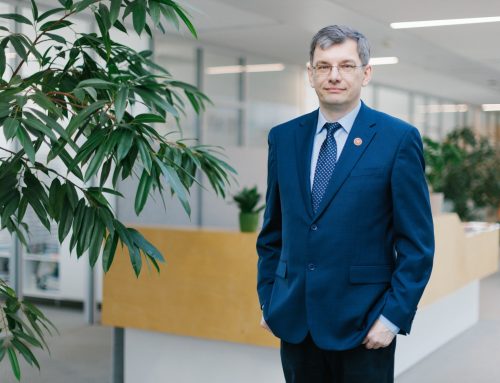
UCU Rector Taras Dobko has returned from a three-week visit to the USA. He visited three American universities – the University of Notre Dame, the University of California, Berkeley, and Stanford University – and met with professors, students, businesspeople, and Ukrainians who live in the USA. “We continue to actively engage in educational and research diplomacy to strengthen the world’s interest in Ukraine, in particular at leading universities of America. There are very many possibilities. Hands and time are lacking. And so, cooperation among Ukrainian universities to create synergy at international venues is becoming important,” noted Taras Dobko.
According to the rector, interest in events in Ukraine is, unfortunately, decreasing. But we can’t throw up our hands. We need to look for new approaches and instruments to promote Ukrainian studies in the world and explain our challenges and opportunities for cooperation: “The goal of my visit was not to ask someone for something. Rather, I tried to explain why it was in their interests to improve close, all-around cooperation with Ukrainian universities and why the Ukrainian experience can be important for a better execution of their own educational missions,” added Taras Dobko.
At the University of Notre Dame on 13 September, the new president, Fr. Robert A. Dowd, was inaugurated. His predecessor, Fr. John Jenkins, who headed the university for 19 years, visited UCU as a sign of solidarity at the start of the new academic year. In his inaugural address, the new president, Fr. Robert, mentioned Ukraine twice. He spoke of war and terrible suffering around the world, particularly in Ukraine. “For all the promise of technological connection, more than half of Americans are lonely. Religious disaffiliation is on the rise. And trust in institutions at an all-time low. Meanwhile, democracies are in crisis, even in the United States political polarization has reached a fever pitch. People seem so entrenched, it’s difficult to have thoughtful, constructive conversations across differences even on college and university campuses, the very places where such conversations should be taking place,” stated Fr. Robert Dowd. “As I begin this journey as President, I invite you to join me and build more bridges: to future generations of Notre Dame students, to one another, as we learn and live side by side, to our neighbors and people in communities around the world.”

The inauguration of the new president of the University of Notre Dame, Fr. Robert Dowd
In the spring of 2022, Fr. Robert Dowd took part in the work of a commission called by the president at that time, Fr. John Jenkins, which developed the program Standing in Solidarity with Ukraine, which foresees deeper academic, spiritual, and cultural cooperation between our two universities.

The new president of the University of Notre Dame, Fr. Robert Dowd, during his inauguration
“The majority of universities are ready to talk with you about the Ukrainian theme, if you come to them with money or at least prospects for them to receive it. In contrast, the University of Notre Dame has spent money to strengthen cooperation with Ukraine. And it continues to do this. Ahead of us are many more new, joint projects with a global influence,” stated Taras Dobko.
At the start of October, UCU was visited by Michael Pippenger, Vice President and Associate Provost for Internationalization at the University of Notre Dame. He met with representatives of the rectorate, students, and also became acquainted with the work of the UCU Medical Clinic.
“Ahead of us there is still much more which needs to be done to support Ukraine and its future. And so Notre Dame announces the allocation of 500 000 dollars to support joint scholarly projects of our universities. We expect that the professors will also enlist students and graduate students to future research projects which will help strengthen the efforts of UCU and Ukraine in the international area.” So Michael Pippenger stated during his visit to UCU.
Taras Dobko also summarized his visit to the University of California, Berkeley. He thanked Kateryna Akymenko and Prof. Yuriy Gorodnichenko for facilitating contacts.
“Building cooperation at Berkeley, as a state university, is not simple. As a consequence of the political turbulence in America, in particular through the consequence of protests on campuses regarding the war in the Near East, a public culture of political neutrality has formed at many state universities in the USA.” Taras Dobko shared his impressions from his visit.

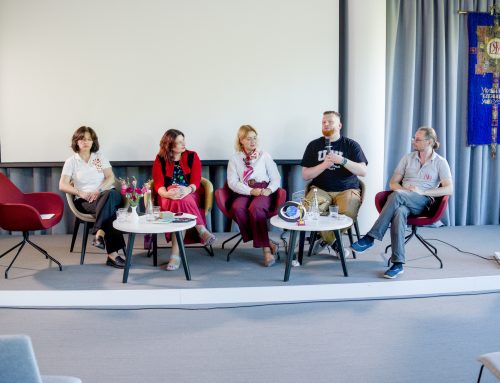
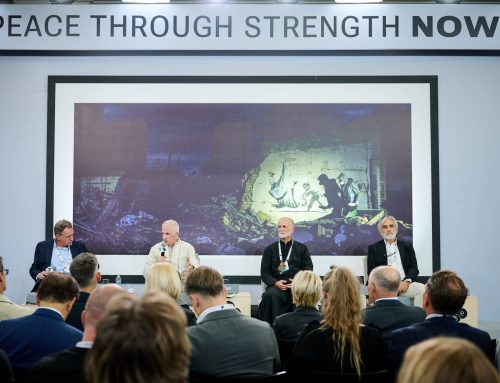
Taras Dobko during a panel discussion “Universities as Hubs for Innovation and Social Change in a World in Crisis” at Berkeley
Nevertheless, according to the rector, at a grassroots level many new initiatives with a Ukrainian character are appearing. During his visit, news was announced about the start of a Ukrainian Studies Chair; half of the funds for the project have already been collected in an endowment. If successful, this will be the first Ukrainian Studies Department on the West Coast of the USA.
Ukrainian professors from the business school at Berkeley initiated a project to create in Kyiv the Berkeley Ukraine Innovation Hub in cooperation with the National University of Kyiv-Mohyla Academy. In the process of discussion is a project in the field of “deep tech,” in which UCU is involved. According to the rector, in a conversation with the first vice-rector and his assistant for academic affairs, cooperation was proposed in the field of machine learning, mental health and healing collective trauma, and research on the conditions for democratic stability.

Taras Dobko during a panel discussion “Universities as Hubs for Innovation and Social Change in a World in Crisis” at Berkeley
At Berkeley, the rector of UCU took part in a panel discussion “Universities as Hubs for Innovation and Social Change in a World in Crisis.”
“Universities should have a missionary character: a desire to solve great questions and social problems; they should give themselves difficult tasks and not simply respond to the demands of their ‘clients.’ Universities should be agents of social change,” stated UCU’s rector during the panel discussion.
As part of his trip to the USA, Taras Dobko visited Stanford University. Here UCU has cooperation with the Graduate School of Business. In spring 2024, forty-two entrepreneurs from all over Ukraine successfully completed their studies at the program Stanford Ignite Ukraine, organized by the CFE-Accelerator of Ukrainian Catholic University and the Stanford Graduate School of Business. Participants for the next semester of Stanford Ignite Ukraine are now being selected.
At Stanford University, the rector of UCU met representatives of the initiative Ukraine Support Alliance at Stanford. The organization numbers some 60 people, including approximately 20 Ukrainians. Last year it was headed by a graduate of the UCU Law School, Kyrylo Korol.
At Stanford, the rector also continued a good tradition of meeting noted entrepreneurs and venture investors. Last year it was Steve Blank, one of the fathers of the Lean startup approach. This year, he met one of the former main directors of Apple. According to Taras Dobko, investors are actively looking for technological inventions which are arising in Ukraine as a consequence of the war.

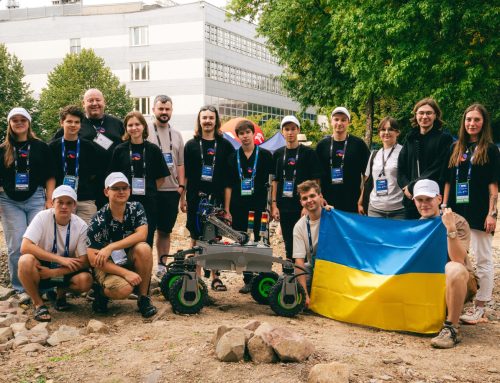
Taras Dobko’s working visit to the USA
“Ukrainian universities are called to be creative and go beyond the boundaries of today’s hardships to imagine what Ukraine will look like in the post-war future. The development and promotion of an attractive and convincing vision of a reborn country is a direct social obligation of academic circles. This is also a necessary condition to end the ‘brain drain’ and encourage Ukrainians to return from abroad. Ukraine must look so attractive that even the risks of an extended military conflict will not frighten people from returning home,” summed up Taras Dobko.