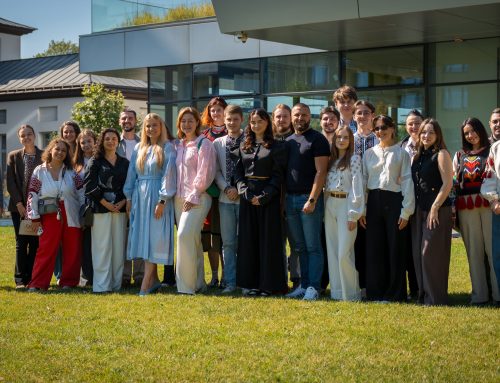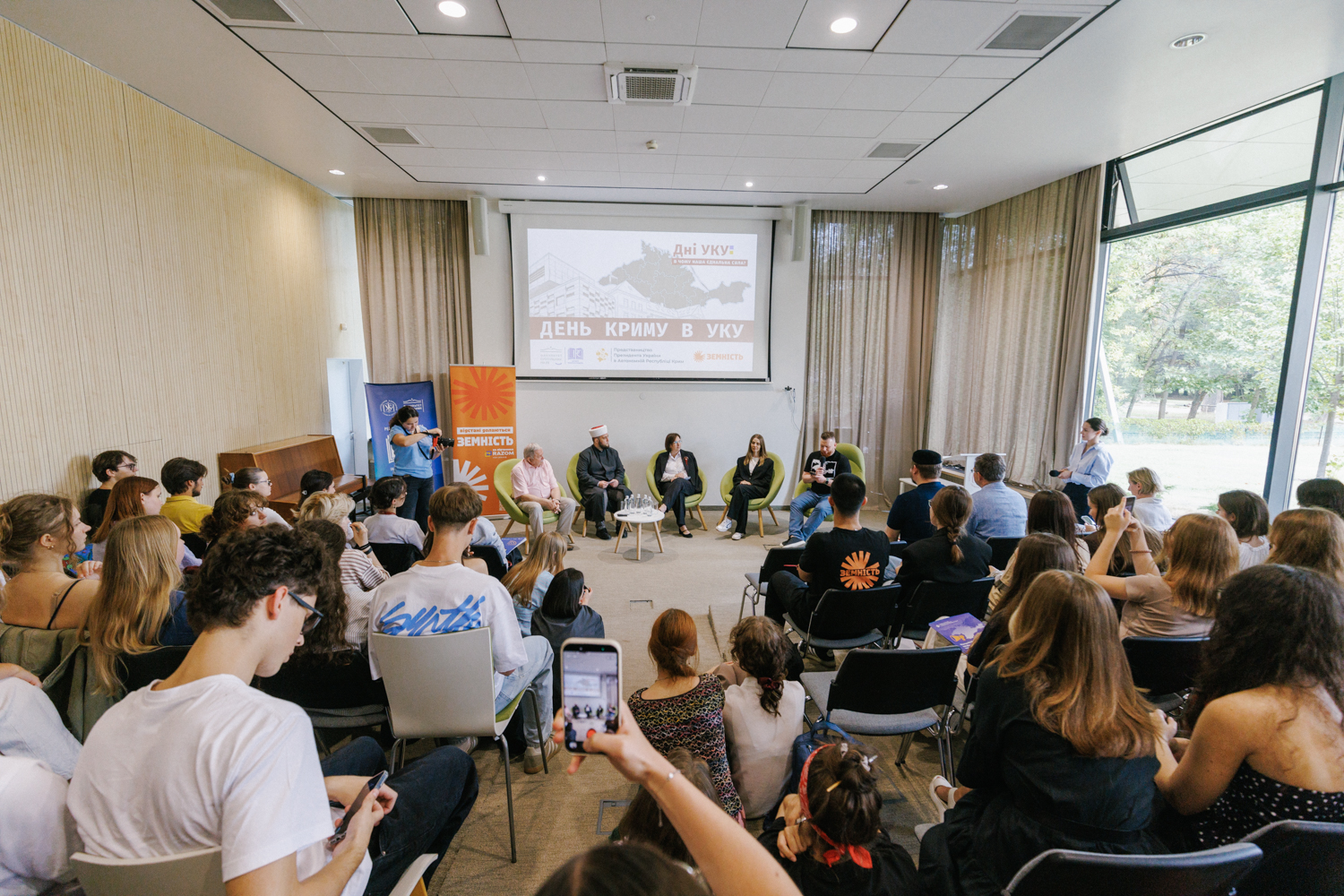
On September 2, as part of UCU Days, the university hosted its inaugural Crimea Day—an event uniting history, culture, religion, language, and the contemporary experience of occupation. The event was co-organized by the UCU Institute of Religion and Society, the Representation of the President of Ukraine in the Autonomous Republic of Crimea, the NGO “Zemnist,” and the Sheptytsky Center.
Crimea Day at UCU
The Institute of Religion and Society at the Ukrainian Catholic University (UCU) has explored the topic of Crimea for many years. Over the past three years, the institute has hosted Crimean Tatar language courses and organized thematic events and meetings, fostering a space for a deeper understanding of Crimean history and culture.
In observance of Crimea Day, the Sheptytsky Center hosted the exhibition projects “Destroyed Mosques” and “Chronology of the History of Crimea,” presented by the Presidential Representation, the Crimea Platform, and Crimea SOS. These exhibits illustrated the history of Crimea through the lenses of struggle, colonization, and deportation, alongside photographs of Muslim mosques on the peninsula destroyed by the aggressor state.
These exhibitions reflect more than just the past; they served as an introduction to the day’s central conversation. Crimea is not merely a territory that Ukraine must liberate; it encompasses a people, a language, a culture, a religious heritage, and a collective memory that must remain an inseparable part of Ukrainian society today.
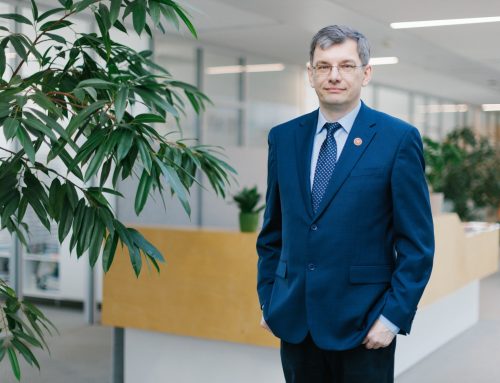
“From the very beginning of our team’s work at the Institute, we dreamed of such an event. I hope that it will become a strong annual tradition,” emphasized Roman Nazarenko, PhD, Director of the Institute of Religion and Society. “We must not allow the Crimean topic to disappear from the Ukrainian agenda. For us, this is not just an important task, but a necessity.”
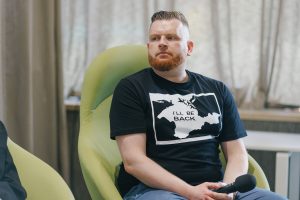
Roman Nazarenko, PhD, Director of the Institute of Religion and Society
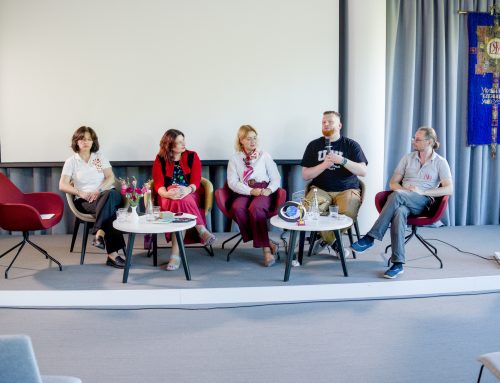
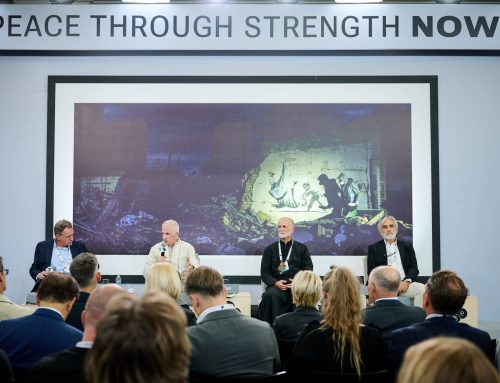
The centerpiece of the day was a public discussion featuring UCU Rector Taras Dobko, PhD; Olga Kuryshko, Permanent Representative of the President of Ukraine in the Autonomous Republic of Crimea; Myroslav Marynovych, Advisor to the Rector of UCU and President of the Institute of Religion and Society; Murat Suleymanov, Mufti of the Religious Administration of Muslims of Ukraine “Umma”; and Mamure Chabanova, a Crimean Tatar philologist and translator. The panel was moderated by Roman Nazarenko.
“The theme of UCU this year centers on the question of our unifying force. Solidarity is not only a consequence of a certain unity or something that grows out of it, but it is also its source. We, as Ukrainians, have a duty of solidarity to the Crimean Tatar people,” UCU Rector Dobko noted in his opening remarks.
Throughout the discussion, panelists framed Crimea as an inseparable part of Ukrainian identity and explored the future of its reintegration.
“Without the liberation of the temporarily occupied territories, it is impossible to restore and preserve a comprehensive Ukrainian identity. I am speaking not about ethnic identity, but about state and civic identity,” said Olga Kuryshko.
“I would speak in the language of the heart and through a completely different perception of Crimea,” added Myroslav Marynovych, a human rights activist, dissident, and Advisor to the UCU Rector. “For me, Crimea is not just a territory. It is people, history, and memory, all of which are of great importance to us.”
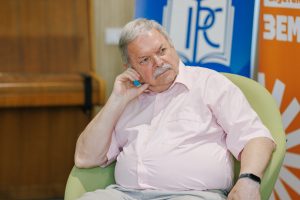
Myroslav Marynovych, human rights activist, dissident, and advisor to the UCU Rector
Archbishop Borys Gudziak, Metropolitan for the Ukrainian Greek Catholic Church (UGCC) and President of UCU, also joined the conversation. He emphasized Crimea’s deep connection to the history of both Ukrainian Christianity and the university itself. “Without Crimea, there would be no Ukrainian Christianity. Without the Crimean martyr Pope Clement I, there would be no Ukrainian Catholic University. When founding the Ukrainian Catholic University in Rome, Patriarch Josyf Slipyj named it in honor of Saint Pope Clement I,” said Archbishop Gudziak. “Without Crimean history and the Crimean people, there would be no full-fledged Ukraine for which our brothers and sisters are risking and giving their lives today.”
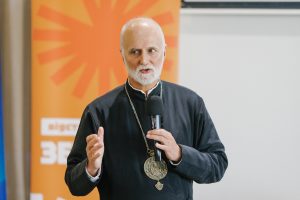
Archbishop Borys Gudziak
In honor of Crimea Day, Olga Kuryshko also held an open dialogue with the youth. Students asked about the future of the peninsula, its return to Ukrainian control, and the role of the younger generation in the reintegration process.
This format moved the discussion of Crimea beyond purely expert analysis. For UCU, it presented an opportunity to create a space where young people could ask difficult questions and actively engage in the conversation about Ukraine’s future.
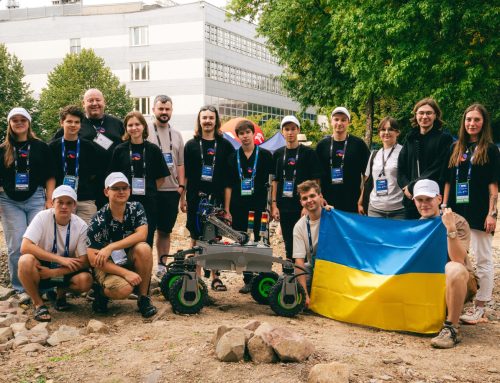
Crimea Day concluded with an open-air literary and musical concert. Safiye Lenter Kyzy performed musical pieces, while poems in Crimean Tatar were recited by Mamure Chabanova, an instructor for the Crimean Tatar language course at UCU, and Viktor Levytskyi, a course graduate and military serviceman.
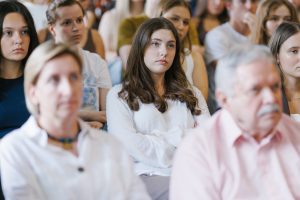
Public discussion during Crimea Day at UCU
For many young attendees, this was their first direct encounter with Crimean Tatar language and culture. While some in the audience primarily know Crimea as a territory occupied by Russia, this evening allowed them to experience the peninsula differently—through language, music, poetry, and the communal singing of songs in Crimean Tatar.
“Occupation is not only control of the territory. Occupation is also an attempt to control our culture, memory, language, and identity,” said Mamure Chabanova, a philologist, teacher, translator, and educator.
Earlier that day, UCU Rector Taras Dobko, PhD, and Permanent Representative Olga Kuryshko signed a memorandum of cooperation between their respective institutions.
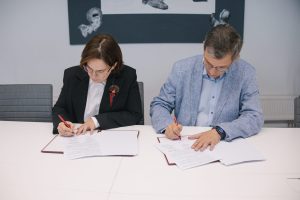
UCU Rector Taras Dobko, PhD, and Olga Kuryshko, Permanent Representative of the President of Ukraine in the Autonomous Republic of Crimea, signed a memorandum of cooperation between their respective institutions
Ultimately, Crimea Day at UCU was more than just a conversation about the peninsula. It was a broader discussion about the future of Ukraine post-de-occupation and what can and must be done today to ensure its return.
The return of Crimea begins not solely with territorial de-occupation, but with ensuring that Crimea remains an active part of our shared Ukrainian present—so that upon its liberation, it will not be foreign to us.
Photos by Maria Urban