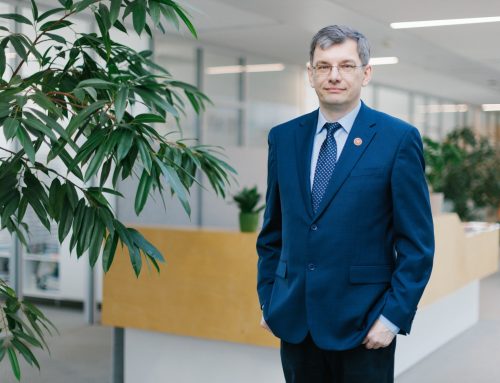
UCU Rector Taras Dobko,accepted an award on behalf of Ukrainian Catholic University from the Commander of the Ground Forces for comprehensive support.
This distinction is given to non-military organizations, individuals, and public and private institutions for their significant contribution to supporting the armed forces. It was presented by Roman Chervonyi, senior officer of the Psychological Recovery Group of the Personnel Psychological Support Directorate of the West Operational Command.
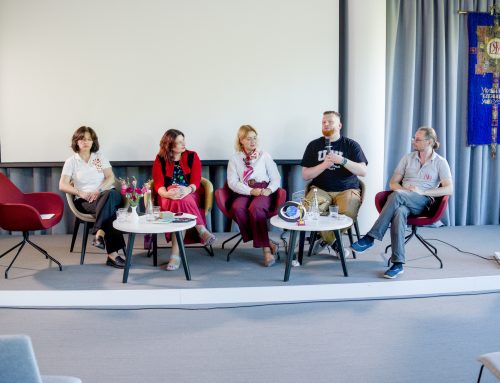
The university received the award for fruitful cooperation between the specialists of the Department of Psychology and Psychotherapy at the Faculty of Health Sciences of UCU and the West Operational Command. Together, they developed and conducted an advanced training and recovery course for combat unit psychologists.
“A prolonged war has very serious consequences for mental health. We see this every day. Over time, the situation will only worsen. That is why adaptation and preparation of our soldiers for combat, maintaining their mental health during this drawn-out conflict (with Russia), and providing recovery, rehabilitation, and reintegration into civilian life are so important. We are grateful to Ukrainian Catholic University for being involved in these processes,” emphasized Roman Chervonyi.
Taras Dobko thanked the Ground Forces for the award:
“We will be glad to help in any way we can. This award is very important for the university.”
Earlier, UCU specialists conducted a training course for military psychologists of the West Operational Command. These officer-psychologists, who work directly with servicemen in combat zones, studied the latest practices of psychological support and recovery. After exhausting and difficult work on the front lines, this training allowed them not only to acquire new knowledge and skills but also to recharge and rest, restoring the resources needed for effective work.
The training took place in the 2024–2025 academic year. In addition to UCU, specialists from Ostroh Academy and the Ukraine Open International University of Human Development also participated. The program was divided into two tracks: one for officer-psychologists who had just graduated from academies or institutes and were beginning their service, and another for experienced military psychologists who already had practical skills and needed further professional development and qualification upgrades.