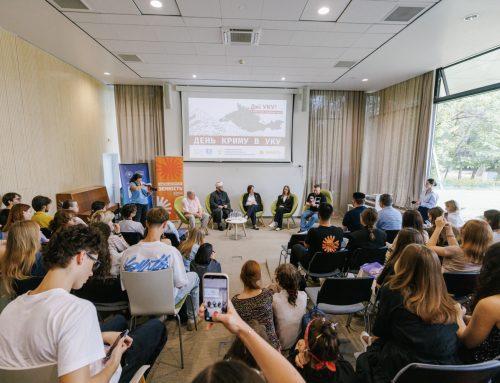
From 8 to 10 July, Ukrainian Catholic University hosted the first such large-scale conference in many years, “Ukraine in the World.” It assembled more than 210 in-person participants and more than 40 online. These were scholars and representatives of universities and academic centers from 38 countries. This is the first time in many years that such a large-scale event in Ukraine gathered researchers of Ukrainian Studies from various corners of the world.

Ceremonial opening of the conference at the Lviv opera house
Knowledge about ourselves is a question of national security.
Before the start of the ceremonies, the participants of the conference visited the Field of Honor at Lychakiv Cemetery and paid their respects to those Heroes who died because of the Russia-Ukraine War.

Participants of the conference visited the Field of Honor
The ceremonial opening of the conference “Ukraine in the World” was held at the Solomiya Krushelnytska National Academic Theater of Opera and Ballet in Lviv. The event was conducted in two languages: Ukrainian and Crimean Tatar.
Ukrainian First Lady Olena Zelenska greeted the scholars through an online connection.
“Ukraine has now become an object not only of international attention but also of deep academic reflection. The war has forced the world to look more attentively at Ukraine, but universities must work so that this interest is not only temporary. They turn interest into knowledge, knowledge into mutual understanding, and mutual understanding into long-term partnerships,” emphasized Olena Zelenska.

Tetyana Berezhna during the opening of the conference
Tetyana Berezhna, Deputy Prime Minister for Humanitarian Policy of Ukraine and Minister of Culture, in her words of greeting stated that Ukraine must talk about itself very clearly, precisely, and understandably. “[Ukrainians need] to speak about our culture, memory, language, sovereignty, freedom, and struggle. Knowledge about ourselves is a question of national security. The more deeply the world understands Ukraine, our history, language, culture, courage, and eternal struggle, the more difficult it will be to diminish our country through an empty, foreign narrative.”

Volodymyr Sheiko greets the conference’s participants
Volodymyr Sheiko, General Director of the Ukrainian Institute, noted that holding this conference was his dream when he started working at the institute.
“I am exceptionally pleased that with this conference we are starting a forum which will gather leading scholars from all corners of the world, so that together they can reflect on and formulate the agenda for Ukrainian Studies. This should work in the interests of Ukraine and society. Ukrainian Studies is not a narrow academic niche but an infrastructural cornerstone of Ukraine’s presence in the world,” emphasized Volodymyr Sheiko.

Fr. Bohdan Prach
In his word of greeting, UCU Vice-President Fr. Bohdan Prach stated: “Russia’s war against Ukraine is not only disdain for humanity but also a failure of understanding. It feeds on the academic community’s lack of understanding of Ukraine. Each center of Ukrainian Studies is working to spread the truth about Ukraine.”
Hryhoriy Baran, Director of the Social Capital Program of the International Renaissance Foundation, underlined that support of conferences like this is a systematic investment so that knowledge about Ukraine arises not only in Kyiv and Lviv but also in leading universities of the world.

Opening of the conference
Anastasia Bezverkha, Head of the Identity Program of the Mnozhyna Foundation, addressing the participants emphasized: “Your research and discussions allow the true face of Ukraine to be presented to the world. I hope that this conference will not be the last.”
The conference’s participants were also greeted by Maksym Kozytskyi, Head of the Lviv Region Military Administration and Andriy Moskalenko, First Mayor’s Assistant.

Participants of the public discussion “Ukraine in the World- From Empathy to Agency.” Photo- Anton Tkachenko
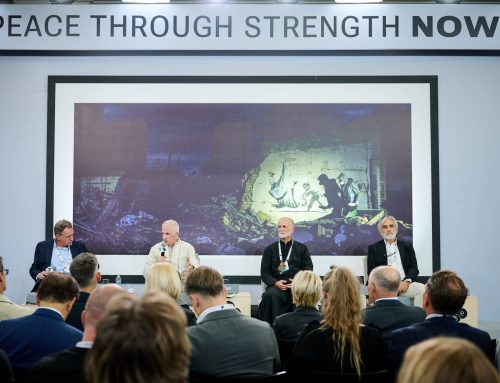
In the public discussion “Ukraine in the World: From Empathy to Agency,” which was part of the official opening, participants included Professor of Ukrainian Studies at the University of Cambridge Rory Finnin, Professor of Kyiv-Mohyla Academy and Warsaw University Ola Hnatiuk, and poet and soldier Yaryna Chornohuz. The event was moderated by journalist and TV host Myroslava Barchuk.
Presentation of The Ukrainian Studies Distinguished Award
During the ceremonial opening of the conference, the Global Coalition of Ukrainian Studies presented The Ukrainian Studies Distinguished Award.

Presentation of The Ukrainian Studies Distinguished Award. Photo- Anton Tkachenko
“Scholars of Ukrainian studies around the world are doing something extraordinary: They are filling the voids of oblivion in their own countries, beyond Ukraine’s borders—and they are doing it for all of us,” emphasized Bohdana Laiuk, Deputy Minister of Culture.
Awards were given to international academic institutions, universities, research centers, partners, and scholars who have made a significant contribution to the development of Ukrainian and Crimean Tatar studies in the world.
The presentation of the Ukrainian Studies Distinguished Award has become a symbolic honoring of the contribution of the international academic community to the development of Ukrainian Studies and one more step to strengthening the global network of researchers, professors, and partners who work on spreading knowledge about Ukraine in the world.

Presentation of The Ukrainian Studies Distinguished Award. Photo- Anton Tkachenko
Awards were presented in six categories:
- “Research on Ukraine” to the Harvard Ukrainian Research Institute, Harvard University, for a multi-year contribution to the development of Ukrainian Studies research, the creation of scholarly programs, publications, scholarship initiatives, and for digital resources which systematically spread knowledge about Ukraine in the world.
- “Ukrainian Studies: An interdisciplinary approach” to European University Viadrina for creating and developing Competence Network Interdisciplinary Ukrainian Studies and also to the Canadian Institute of Ukrainian Studies, University of Alberta, for many years of interdisciplinary development of Ukrainian Studies in North America.
- “The development of academic infrastructure” to the Norwegian Network for Research on Ukraine (UKRAINETT) for creating a national network for research on Ukraine in Norway and to the University of Tartu Ukraine Centre for the development of Ukrainian Studies in the Baltic region and also the creation of modern educational programs.
- “Partnership for the development of Ukrainian Studies” to the International Renaissance Foundation for supporting the initiative of the Global Coalition of Ukrainian Studies, the development of international academic partnerships, and spreading knowledge about Ukraine.
- “For personal contributions to the development of Ukrainian Studies” to Professor of the University of Cambridge Rory Finnin for the creation of and the multi-year development of Cambridge Ukrainian Studies, development of teaching of the Ukrainian language, culture, and the history of Ukraine, and also international promotion of Ukrainian and Crimean Tatar studies.
- “Innovative educational initiatives” to the University of L’Aquila for the organization of the first international Erasmus+ Staff Week “Making Ukrainian Studies Relevant” and Professor Jürgen Fuchsbauer (University of Innsbruck) for the initiation and academic coordination of the program “Developing Ukrainian Studies at European Universities.”
Strengthening connections among Ukrainian Studies scholars of the world
The goal of the conference was not only to create a space for presenting the current status of research in Ukrainian Studies but also to strengthen new professional contacts among centers and researchers in Ukraine and abroad and to stimulate future partnerships and scholarly, educational, and cultural projects.

Ostap Slyvnynskyi
“Ukrainian Studies scholars should get better acquainted, listen to one another, and consider joint projects. This is why, above all, we need this conference. But it is also an opportunity to work together on strengthening Ukrainian agency in the world, that is, what we say daily: ‘nothing about Ukraine without Ukraine.’ So, it’s very important that his conference, despite the war, is happening in Ukraine, with significant participation from Ukrainian researchers,” noted poet, translator, literary studies expert, and UCU professor Ostap Slyvynskyi, who was a co-organizer of the conference.
At the foundation of the conference lay the idea of re-thinking Ukrainian Studies, based on the new content of Ukraine today, networking, communication, and also with an awareness of the multilingual nature and diversity of the culture.

The opening of the first day of the conference
“Many remember congresses of Ukrainian Studies scholars from the 1990s to 2010s. Much has changed since the last congress in 2018. Above all, the full-scale war began. This has made Ukraine more noticed and influential on the world map and changed the structure of global Ukrainian Studies. At this moment of interest in Ukraine and solidarity with it, a number of new centers have appeared, and Ukrainian Studies are more focused than previously. It has left the limits of culture, language, literature, and history, now touching geopolitics, sociology, and economics. This all requires a re-thinking of Ukrainian Studies and a new network,” emphasized Ostap Slyvynskyi.
With the start of the full-scale invasion, the limits of Ukrainian and Crimean Tatar studies have spread in the global and interdisciplinary context.

Andriy Sybiha’s talk during the opening of the conference’s first day
“In time of war, Ukrainian Studies in the world is a question of our defense. This is a response to attempts to eliminate our language, to tear out our roots, our memory, and our voice. Today they help us resist the aggressor,” Andriy Sybiha, Minister of Foreign Affairs of Ukraine, emphasized during his talk at the opening of the conference’s first day. “For every Russian strike on a Ukrainian library we create 10 new bookshelves on other continents. In response to each attempt to wipe out our history, we create new courses, research, archives, translations, conferences, and academic programs. It is very important that interest in Ukraine be converted into new educational and research centers.”

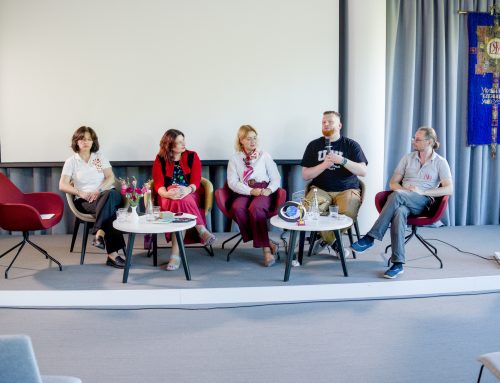
Conference on Ukrainian Studies at UCU
According to the Ukrainian Institute, there are now 200 centers of Ukrainian Studies in the world. And UCU has hosted a key event for the international community of Ukrainian Studies scholars, the “Ukraine in the World” conference.
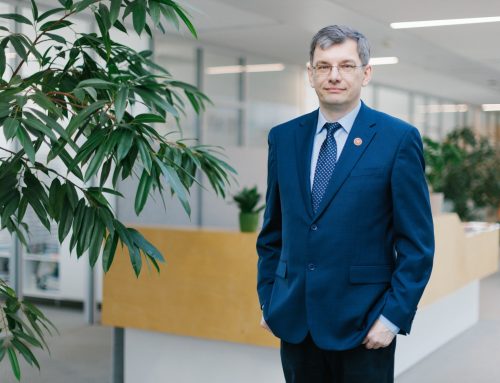
“The war has much changed ideas about the region of Central and Eastern Europe. However, it is now difficult to say if these changes have led to structural transformations in the scholarly circles of many countries. I consider that Eastern European Studies, and particularly Ukrainian Studies, need deep structural renewal. Each center of Ukrainian Studies sets as its goal to tell the world about Ukraine, encouraging people not only to look at the news headlines but to get immersed more deeply in the complicated history and realities of these lands, demonstrating the active role of the Ukrainian people and underlining the global significance of events happening in our part of the world,” stated UCU Rector Taras Dobko.

Ukrainian Studies Conference at UCU
He added that today engaging in Ukraine Studies is not simply an intellectual exercise. It is an act of solidarity with a nation which is conducting an existential war for its survival and future.
“Were it not for the Armed Forces of Ukraine, we would only be studying Ukraine’s past, not its present. We could not gather for this conference. The task of Ukrainian Studies is to show the world why this struggle has meaning and why Ukraine deserves constant support. In this sense, Ukrainian Studies is a convincing example of scholarly diplomacy,” said Taras Dobko.

Dmytro Sherengovsky during the conference on Ukrainian Studies
UCU Vice-Rector for Outreach and Social Engagement Dmytro Sherengovsky, one of the conference’s organizers, underlined that our task is to make it so that we are spoken about not only in the context of the traumas of Russia’s war against Ukraine but so that we have our own voice in the world.
“This conference is an opportunity to talk and reflect on Ukrainian Studies today, our understanding today of us ourselves. Ukraine is an independent intellectual pole. And we and our colleagues from various countries must together form this intellectual pole and spread information about Ukraine throughout the whole world.” Dmytro Sherengovsky
The conference included more than 55 academic panel sessions, 15 presentations of research centers and projects, 5 book presentations, and two exhibits, one of which was prepared by UCU’s Center of Child Dignity.

Exhibit of UCU’s Center of Child Dignity
“This conference is very logical for UCU. In our strategy, we talk about a university which serves and which creates meaning for Ukraine and the world. And this means that we do not simply want to be international, but we strive so that our international character, contacts, and communities work for the common good. If Ukraine will be described and studied without Ukraine, then sooner or later it will be spoken about in some foreign categories. It is we ourselves who must create these categories. This is our contribution to the Humanities, Social Sciences, and international politics, which we are forming today,” added Dmytro Sherengovsky.

Alim Aliev
Alim Aliev, Deputy Director of the Ukrainian Institute, thanked all who have worked for years and for decades in order to strengthen Ukrainian and Crimean Tatar studies abroad.
“We are a society which can realize its dreams. It is a dream that we host a conference like this in our native Crimea,” said Alim Aliev.
The event was organized by the Ministry of Culture of Ukraine, the Ukrainian Institute, and Ukrainian Catholic University in cooperation with the Global Coalition of Ukrainian Studies, and with the support of the International Renaissance Foundation, the Mnozhyna Foundation, and the city of Lviv.