The admissions campaign for higher education institutions has concluded in Ukraine. Compared to last year, the demand for all engineering specialties among applicants has increased by more than 50%. The Faculty of Applied Sciences at the Ukrainian Catholic University (UCU) has emerged as one of the most popular choices in this field.
DOU spoke with UCU Rector Taras Dobko, PhD about how the Ukrainian engineering tradition is changing, why UCU does not award scholarships for high scores on the NMT (Ukrainian equivalent of SAT-ed.), and what forced the Faculty of Applied Sciences to stop supporting individual student “pet projects.” The conversation also covered why it is inadvisable to launch programs solely for current challenges, how many UCU graduates have left Ukraine, and how to retain talented youth.

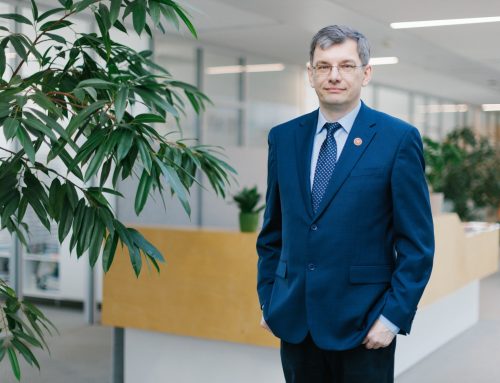
Taras Dobko, PhD, Rector of UCU
“We are not interested in training ordinary developers for outsourcing.”
Q: Taras, what are your first impressions of the results of the admissions campaign? Is there anything special about the new admissions process at UCU?
Dobko: This year, 477 first-year students joined the Ukrainian Catholic University, about the same number as last year. In total, we received over 1,600 applications, which is our highest number since 2022. We are pleased that over 80% of our incoming students indicated UCU as their first choice during the admissions campaign. The average score is quite high—171.4. This means we have recruited a critical mass of capable students, who learn not only from their instructors but also from each other.
When parents of applicants ask me for advice on choosing a university or a study program, I always mention three things. First is the right direction; it is important to choose the right general field—whether that is the natural sciences, social sciences, or humanities.
The second is the environment. In an environment of strong, motivated students, your own results will be much better. The third is the attention of the faculty. It is important that instructors have time for you.
When a teacher enters the classroom, they face a dilemma: whom should they focus on? If a critical mass of students is unmotivated or inadequately prepared for university-level coursework, those who are more capable and ready to work suffer. They simply stop developing. That is why the environment is crucial.

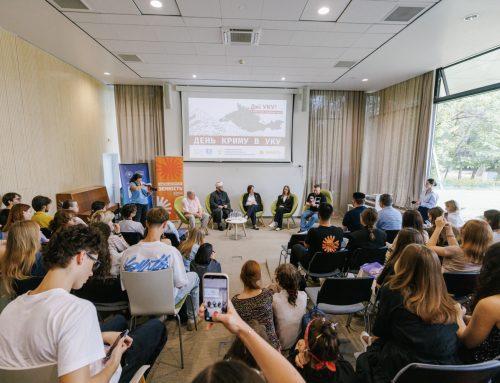
Events at the Ukrainian Catholic University
Q: According to data for Ukraine, the demand for engineering specialties has increased overall by at least one and a half times. How do you assess this trend, and do the admissions results at UCU reflect it?
Dobko: The most popular bachelor’s programs are those taught in the Faculty of Applied Sciences: computer science, IT and decision analytics, and robotics. By the way, there is a misconception that we have a special bias toward IT specialists, as if they are the elite. This is not the case. All three bachelor’s programs are equally high-quality and well-thought-out, and many practical classes are shared among all students in the faculty.
We are consciously moving toward an interdisciplinary format because we understand that software, hardware, and decision analytics are equally important. In other words, we are applying a systemic engineering approach.
Indeed, the growing demand for robotics and other engineering specialties is a nationwide trend, which is wonderful. It shows that we, as educators, have successfully conveyed the prestige of engineering professions to society. Now, the most difficult part begins: we need to look “under the hood” and figure out how this engineering education is implemented on the ground. We should be concerned not only with the quantity but also with the quality of future specialists. I believe we need a serious conversation among all interested parties—universities, businesses, and the Ministry of Education.
This conversation must start with the revival of the engineering culture itself. What do I mean? During the Soviet era, the engineering infrastructure in Ukraine was very powerful, with numerous design bureaus, production facilities, and factories. Then, an interesting shift occurred: the children of Soviet engineers went on to develop the IT industry. As a result, we face a paradox. We have many strong programmers, which is undoubtedly a success for the IT sector, but we have essentially lost an entire generation from the traditional engineering process.
We have nearly lost the expertise of the old school, particularly the understanding of how to translate an idea into hardware to create a working solution. All of this needs to be rebuilt practically from scratch, and in my opinion, it is best to start with changes to the education system.
Engineering education should focus on project work and learning through real-world tasks starting in the first year. This is the only way to form a future specialist with a specific production vision—an understanding of whether it is realistic to manufacture a product using available materials and equipment. They must ask: How much will it cost? Is it advisable to scale it? Can it be repaired in the field? All of these are components of systemic engineering thinking that a modern specialist should develop as part of their formal education. It is simply unrealistic to master these skills during a short, supplementary course.
At the same time, it is important not to mindlessly apply foreign models to our local context. The conditions in which engineers work in Ukraine are very different from those in, say, the United States. Our engineers must be frugal and capable of working within strict constraints—whether regarding time, budget, or other resources.
As a university, we are also forced to account for certain constraints. To avoid wasting resources, for example, we have moved away from supporting small, individual student pet projects.

Events at the Ukrainian Catholic University
Q: Why is that? Typically, IT professionals without commercial experience rely on pet projects to attract recruiters. Yet, you are suggesting that your students forego them.
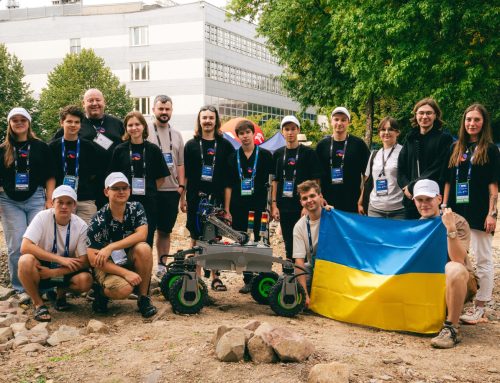
Dobko: Yes, but we ask them to forego them in favor of large team projects. We already have a successful example: about twenty students from the faculty built a model of a Mars rover for the European Rover Challenge and made it to the finals.
The rover was named Indomitus, which means “indestructible” in Latin. According to the competition’s parameters, it must perform tasks that closely simulate real space missions. Our Indomitus can navigate difficult terrain, take soil samples using a manipulator arm, conduct reconnaissance in conjunction with a drone, and interact with the operator via a ground station. In September, we will travel to Krakow to present it at the competition finals. The university invested $40,000 in this project.
While it is not a small amount, it yielded a tangible result that inspires both us and the students, and one that future employers will undoubtedly appreciate. Equally important, the students did not abandon their idea halfway through—as often happens with small, individual projects—but saw it through to completion. This is exactly what we currently strive for in all of our projects. We even decided to allocate more time to some of them, extending the timeline from a single semester to a full academic year. We want students to go beyond showing an intermediate result or getting credit for an interesting idea; we want them to bring it to the product stage so they can cultivate ambition and learn how to execute it.
Even when we launched the computer science program in 2016, we understood that we were not interested in training ordinary junior developers for outsourcing. We set a goal for our students to master complex, knowledge-intensive fields, such as machine learning. We want them to work in product companies or, ideally, build their own startups and create jobs.
This was actually a significant challenge. At that time, a student could easily land a job at an IT outsourcing company during their second year, earn more than their parents, and feel like they had the world on a string. As a result, many relaxed too early, stopped developing their skills, and eventually lost their competitive edge.
Now that the market has changed and it is much harder to break into IT, our mission is more important than ever: to instill in young IT professionals a thirst for learning and continuous improvement.
Q: And how can this be achieved?
Dobko: A specialist grows only by overcoming challenges. Our job is to find a worthy challenge for a young person and help them navigate it without breaking down—to provide comprehensive support, allow them to make mistakes, and teach them how to correct those mistakes.
And what constitutes a challenge for a tech professional? Naturally, a complex and interesting project. Such projects require funding. As with the Mars rover, if we hadn’t secured $40,000, nothing would have materialized. Therefore, we are constantly seeking grants for student projects. Frankly, I believe the Ukrainian business sector should have stepped in long ago to say definitively, “We need high-quality specialists; let’s collaborate.”
However, businesses largely stood on the sidelines, and this has only begun to change with the onset of the full-scale war. Finally, we are seeing positive cases where businesses work closely with universities, participating in supervisory boards and helping shape educational programs. For example, Fire Point, in partnership with the Kyiv School of Economics, launched an “Innovative Production Engineering” program with a dual-study format. This is a very positive step, but more is needed.
There is still insufficient direct investment from businesses in education, as well as a lack of joint R&D centers and technology parks affiliated with universities. There is much talk about this, but most ideas seem to remain strictly on paper. I truly hope the new Minister of Education, Andriy Butenko, who previously headed the National Agency for Higher Education Quality Assurance, will address this problem.
Returning to the question of ambition, I want to emphasize that it is fueled simply by being part of an academically strong team. However, this is also a test. Young people who are used to being the stars and leaders at their high schools sometimes struggle with the competition. I always warn the parents of first-year students to be prepared to support their children through this new experience, because this experience builds maturity. It fosters common sense and a certain humility.
This is also a positive aspect of international projects: we push students out of their comfort zones and show them they have room to grow. Let them see that they are capable of competing on an equal footing with peers from the best international universities. This provides both the motivation to grow further and confidence in their own abilities.

Events at the Ukrainian Catholic University
Q: Do you track the proportion of your graduates who go on to work in IT or establish their own companies?
Dobko: About 90% of our graduates work in IT-related fields—ranging from radio electronics to consulting. As for the 10% who do not choose engineering, they have very unique paths. For instance, Iryna Zhluktenko is a co-founder of the Lapka Dzygy Foundation (we actually recorded an interview with co-founder Taras Zhluktenko), someone else manages educational projects, and another is developing their own agricultural venture. We are glad that we produce such interesting success stories. We also have alumni who have been serving in the Armed Forces of Ukraine for four years, performing tasks far removed from IT. About 5% of our graduates are co-owners of venture companies. However, this data becomes increasingly difficult to analyze each year because, for security reasons, not all graduates disclose their places of employment.
“We are moving toward a full-fledged engineering faculty”
Q: Have there been any innovations among the technical programs at UCU this year? Perhaps new areas of focus have emerged in response to current needs or challenges in defense tech?
Dobko: We are gradually transitioning from a traditional IT faculty to a full-fledged engineering faculty. Our primary focus is interdisciplinarity.
Currently, the Faculty of Applied Sciences offers three bachelor’s programs: Computer Science, IT and Decision Analytics, and Robotics. It is important for us to break the harmful stereotype that sometimes circulates in society—the idea that if you couldn’t handle IT, you should go into engineering. This is the wrong approach.
There are no “privileged” or secondary tracks at UCU. On the contrary, we consistently mix students from different programs. A student spends four years on a bachelor’s degree and two on a master’s degree. Any program created solely in response to a fleeting, current challenge is doomed to fail within six months because the market will inevitably change.
When artificial intelligence was just gaining momentum, everyone declared that “prompt engineer” was the new profession, and some likely even created educational programs for it. Today, Claude itself creates its own prompts based on data examples. We realized we needed to go deeper: we added a course on Generative AI, expanded our “Mathematical Methods of Machine Learning” course with modern algorithms, and developed a small infrastructure for training our own models—which later gave rise to the LAPA (Ukrainian Large Language Model) project.
Regarding defense tech, when we speak with our graduates, we see that the biggest challenge is not hard skills, but values. Defense tech is far from a work-from-home job. It involves constant trips to the front line and bearing responsibility for products upon which people’s lives depend. These are much more complex issues for which students must be prepared. For example, you must be ready to work under varying conditions—sometimes at 5°F (−15°C) and sometimes in 95°F (+35°C) heat. If you lack a strong inner core, the war will break you. Skills are important, but the primary challenges lie elsewhere.

Events at the Ukrainian Catholic University
Q: There is currently much discussion about the unsatisfactory level of teaching in physics and mathematics at the high school level; most graduates barely achieve passing scores in these subjects on the NMT. This past May, there were even proposals to cancel the mandatory math test entirely. As a community of tech professionals, this is frankly worrying. In your opinion, how severe is the situation with secondary education?
Dobko: The problem is quite deep. From conversations with colleagues at other universities, we know of situations where an applicant achieves passing scores but cannot handle the university curriculum simply because they lack a foundational high school education. To us, this indicates a systemic crisis in secondary education, caused by the fact that for years, admission to pedagogical faculties was treated as an afterthought. Applicants with the lowest scores on external examinations and the NMT were the ones enrolling in those programs.
Q: Can universities influence this situation from their end?
Dobko: We are trying to work with schools. We ran the “Leave No One Behind” program with support from Taiwan, where computer science teachers from the Lviv, Ivano-Frankivsk, and Poltava regions took robotics courses and defended projects. Now, together with the Nova Ukraine humanitarian foundation, we are working to create a horizontal STEM teacher community where educators can communicate and share experiences. Our role is to moderate this community and act as the “adult in the room”—ensuring we do not recommend anything harmful or ineffective. Teachers can certainly find various materials on the internet themselves, but someone needs to guide them in the right direction. Additionally, most of these materials are in English, and unfortunately, many school teachers still do not speak it at a sufficient level. This is another significant problem.
“We must fight for those who go abroad for reasons other than the war”
Q: Are you seeing the consequences of parents taking their male high school graduates abroad? Has the ratio of young men to young women among students changed?
Dobko: At the Faculty of Applied Sciences, we have maintained a stable ratio of 60% boys and 40% girls; these proportions have not changed this year. However, the outflow of talented young people from Ukraine is certainly happening—and, according to my observations, it occurs exactly when it is time to choose a university.
For example, we monitor participants in the Junior Academy of Sciences and Olympiad winners. The Dean of the Faculty of Applied Sciences, Oles Dobosevych, is one of the leaders of the mathematical Olympiad movement in Ukraine. Often, Olympiad winners enroll at Cambridge, Harvard, or MIT and never return. There have also been situations where applicants submitted their documents to us as their first choice, only for us to discover they did so purely as a backup plan, having already left to study abroad.
Q: How do you believe talented youth can be retained in Ukraine?
Dobko: This is a problem with no universal solution. I believe we cannot—and do not have the right to—influence people who leave for security reasons. However, we must fight for applicants who are simply seeking a good education and strong professional prospects.
Our main arguments are, first, our high standard of education, and second, the opportunity to participate in international projects. For several years, UCU has participated in the Responsible AI for Ukraine program, initiated and supported by the Center for Responsible AI at New York University. This program brings together researchers from over 25 universities in the US, France, the UK, and Israel. Our students conduct joint research with them and publish in leading scientific journals, realizing that a Ukrainian education is a highly effective gateway to the global stage. As a result of these efforts, we decided to establish the Center for Data, Artificial Intelligence, and Society at UCU.
This talent-retention strategy genuinely works. Indirect confirmation of this came from the statistics on students who voluntarily left our university during the year after the government granted young men under 22 a permission to go abroad. Even if we assume every one of these students paused their studies specifically to leave the country (which is not the case), there were no more than 20 of them all year—about 3% of all bachelor’s students at UCU. We are deeply grateful to our students and their parents who, despite the realities of the war, continue to believe in Ukrainian education.
Q: Do you have data on how many UCU graduates have left Ukraine overall?
Dobko: Since UCU’s founding in 2002, we have graduated about 9,000 specialists, and only 10% of them live abroad. In my opinion, this is a very low percentage. We strive for all our alumni to maintain their ties with Ukraine. We have a UCU Alumni community that organizes events worldwide. This year, we held several online gatherings for our alumni in North America, and for those living in Europe, we regularly host in-person meetings at our center in Wrocław, Poland.
“We don’t lure students with scholarships because we don’t want to buy talent”
Q: In your view, what is the main difference between the Ukrainian higher education system and Western systems? What is our advantage, and what aspects urgently need to change?
Dobko: Despite all the challenges facing our higher education system, there is a consensus in Ukraine that it must exist. Graduating from high school and entering a university is viewed as a standard stage of life here. We take it for granted, but it is actually a tremendous asset to our society. For Americans, by contrast, higher education is often an option—an elitist one, accessible primarily to the wealthy. As a result, the social divide in the US continues to deepen.
We do not have such a stark divide because education is widespread and accessible. However, there is a flip side to this. Unfortunately, there are institutions of higher education that merely imitate the educational process: students pretend to study, and teachers pretend to teach. Such universities will always have clients who simply need a piece of paper—and so be it. But I would like to see a transparent education market develop in our country, where no one misleads applicants, and those seeking truly high-quality knowledge know exactly where to find it.
We are seeing this market gradually take shape, and students are becoming more demanding. For example, applicants choose UCU despite our relatively high tuition—165,000 UAH per year for undergraduate studies. Of course, we have social scholarship programs for talented students whose families cannot afford that amount. This year, one in two incoming students will receive a social scholarship that fully or partially covers their tuition.
However, as a matter of principle, we do not offer academic entrance scholarships based solely on high NMT scores. Students can receive state grants for those scores, which is a separate matter. As a university, we do not buy talent. We want applicants to be motivated primarily by the quality of our education, not by financial incentives. If a student subsequently demonstrates strong academic performance, we award them an academic scholarship that covers 50% of their tuition. We also strictly refuse to lower our passing scores; in fact, we raised them for some disciplines this year.

Taras Dobko, PhD, Rector of UCU
Q: I once spoke with the rector of the University of Tartu in Estonia, who mentioned that only 80% of their students complete their studies; the rest drop out somewhere along the way. What is the situation like at UCU?
Dobko: It is roughly the same, and we consider that normal. You know, some universities operate under an unspoken rule never to expel students who pay tuition. The logic is that since the student brings in money, the university must drag them across the finish line to a diploma. This is unacceptable to us—not just for reputational reasons, but because it impacts the effectiveness of education for everyone else. When a critical mass of struggling students is admitted into a cohort, the instructor faces a dilemma: do they spend time bringing those students up to a baseline level, or do they simplify the curriculum? Either way, the capable, motivated students who want to advance are the ones who suffer.
Therefore, we do not hesitate to expel students who fail to meet academic standards. On the flip side, we do have an early-warning system to detect academic struggles and support students in getting back on track. Interestingly, students from the Faculty of Applied Sciences who pause their studies for one reason or another often return a year or two later with renewed strength and motivation.
In our view, the primary challenge is not competing with domestic institutions, but with international ones, as the risk of a brain drain from Ukraine remains high. At the same time, it is a good thing that universities exist with different missions and educational philosophies. This gives students the opportunity to choose where they can best realize their talents. I do not see domestic competition as a problem—not only because it drives improvements in educational quality, but also because our labor market will easily absorb more high-quality engineers than Ukrainian universities can produce. The harvest is plentiful, but the workers are few…
It is true that front-line universities are currently suffering the most from the outflow of students. Yet, despite all these difficulties, many of them are doing fantastic work and maintaining the loyalty of their applicants and students. For example, I am deeply impressed by the teams at Sumy State University and Dnipro Polytechnic. It is crucial that, despite the competition, good Ukrainian universities recognize we are all working toward a common goal.
Source: DOU