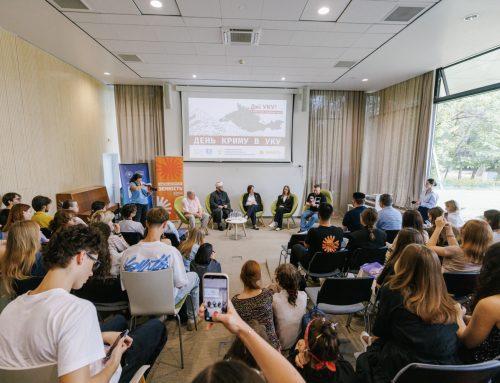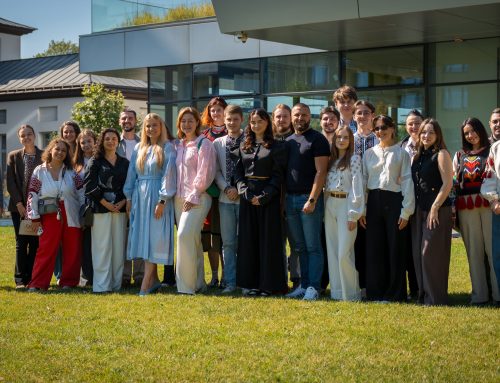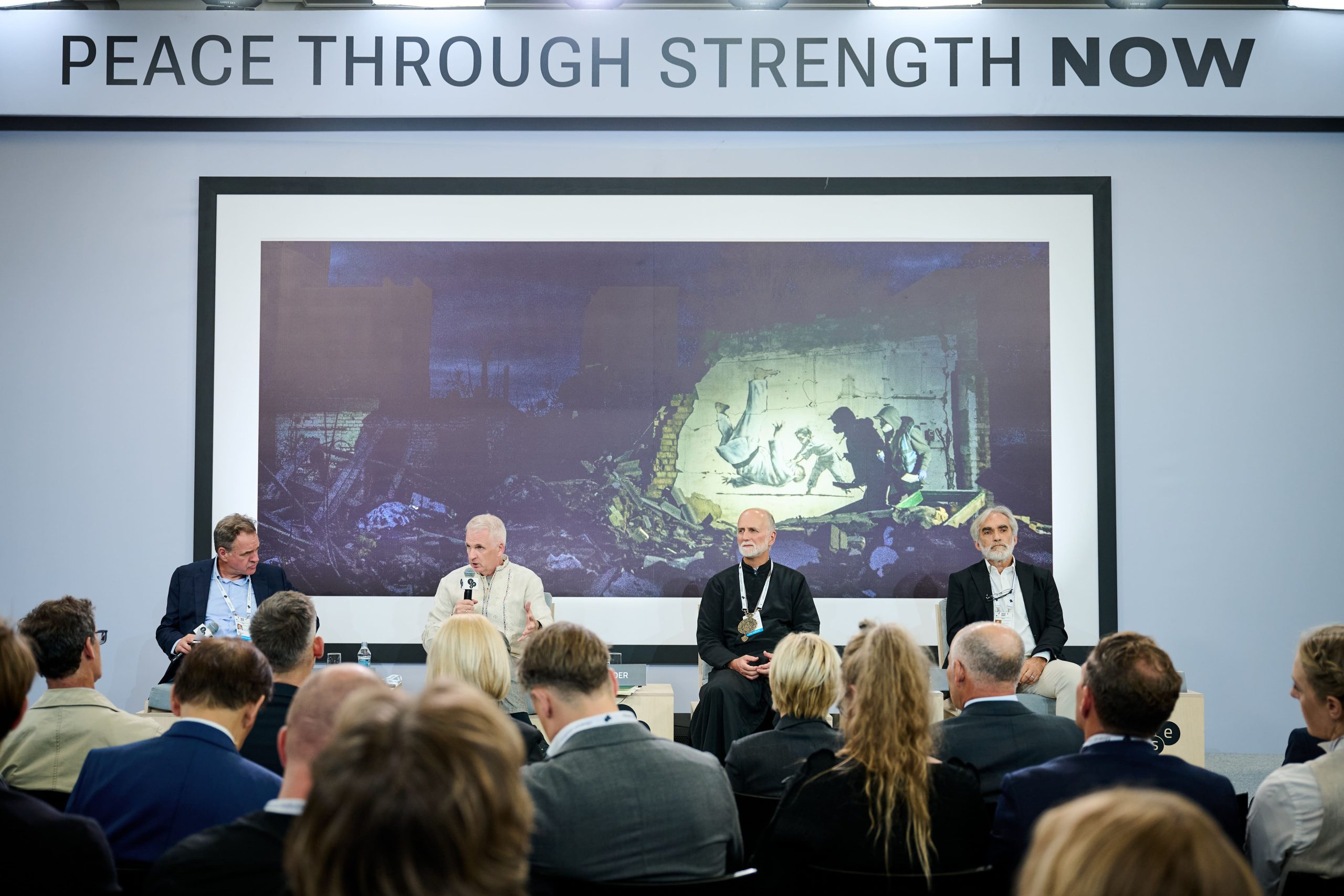
The 22nd Yalta European Strategy (YES) Conference was held on September 11–12. Due to Russia’s temporary occupation of Crimea, the forum has been hosted in Kyiv since 2014. This year, the event brought together more than 700 representatives from 28 countries around the world.
Archbishop Borys Gudziak, Professors Yaroslav Hrytsak and Timothy Snyder at the Yalta European Strategy Conference
The Yalta European Strategy Conference is a leading international project that has been bringing together politicians, diplomats, business leaders, and experts since 2004 to discuss Ukraine’s European future and global security challenges.
This year, the central theme of the forum was “Peace through Strength NOW.” Over the course of two days, participants discussed the trajectory of the Russian-Ukrainian war and the prospects for its conclusion, the security of Ukraine and Europe, the development of defense technologies, the economy, and Ukraine’s further European integration.
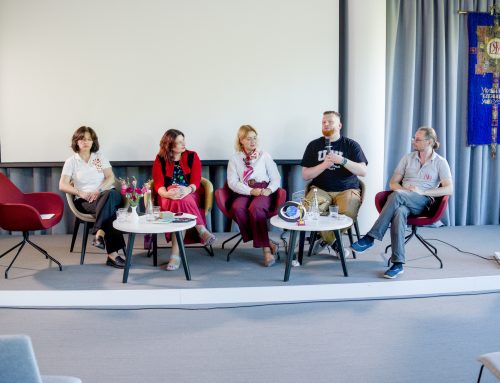
Archbishop Borys Gudziak, Metropolitan of the Ukrainian Catholic Archeparchy of Philadelphia and President of the Ukrainian Catholic University (UCU); Yaroslav Hrytsak, historian and UCU Professor; and Timothy Snyder, a world leading historian, Professor, formerly of Yale University, and currently of the University of Toronto, and great friend of Ukraine and UCU, participated in a panel titled “Ukraine—A Territory of Historical Innovations.” The speakers discussed Ukrainian history, national identity, and the role of Ukraine in the life of the Russian Empire.
Speaking about the role of history in shaping the modern vision of Ukraine, Professor Timothy Snyder emphasized that understanding the past is a necessary prerequisite for making strategic decisions today. He also praised the work of Ukrainian researchers in uncovering and contextualizing the history of Ukraine.
“It is impossible to conduct modern politics or strategy without history. The great merit of Ukrainians in general, and my Ukrainian colleagues in particular, is that even in times of war, when so much else is happening, they work with even greater persistence and focus—but at the same time with great openness and curiosity—on the fundamental question: Who are Ukrainians?” Snyder noted.
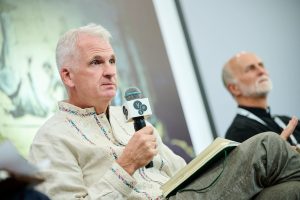
Professor Timothy Snyder at the Yalta European Strategy Conference
Archbishop Borys Gudziak drew attention to the ethical dimension of studying Ukrainian history.
“We are in the midst of a war. War is destruction and division. This war is built on historical lies, as well as on the history of empires and religions,” he stated.
Archbishop Gudziak expressed his conviction that the Russo-centric view of Slavic history has heavily influenced global perceptions of Ukraine’s ability to resist Russian aggression.
“Because of the Russo-centric view of Slavic history prevailing in people’s minds, people thought that Ukraine would not last even three days (a full scale Russian military aggression-ed.). This translates into very clear strategic and tactical errors and misconceptions,” he emphasized.
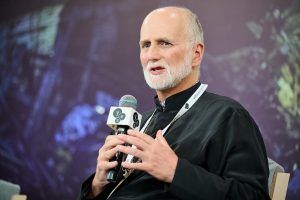
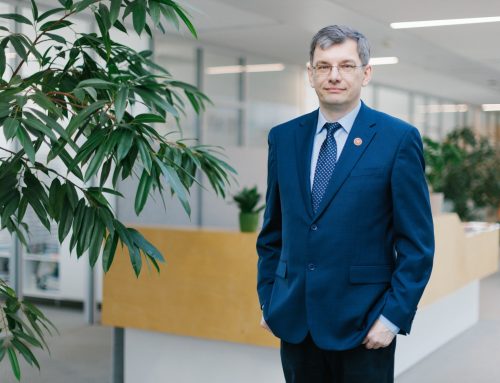
Archbishop Borys Gudziak at the Yalta European Strategy Conference
Professor Yaroslav Hrytsak drew parallels between the modern era and different periods of Ukrainian history, emphasizing the nation’s geopolitical significance.
“Ukraine holds global significance not only today. This has been true more than once—during the First and Second World Wars, in the 17th century, and during the periods of territorial development and the formation of the first cities. This is a strategic territory. If you want to become a modernized superpower, you must control this territory through its resources and political significance,” the historian noted.
According to Hrytsak, an important feature of the Ukrainian historical experience is the absence of a mythologized “golden age.”
“This is the key difference between Ukraine and Russia, because Ukraine does not have a ‘golden age’ to which it as a state could return. The golden age of Ukraine is ahead!” concluded Professor Hrytsak.
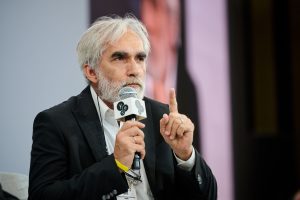
Professor Yaroslav Hrytsak at the Yalta European Strategy Conference
The panelists emphasized that understanding Ukrainian history provides a clearer picture of Ukraine’s role in global processes and the contemporary context. By researching the past and rethinking historical experiences, Ukrainians are forming a deeper understanding of their own identity and determining the place Ukraine currently occupies—and can occupy—in the world.